
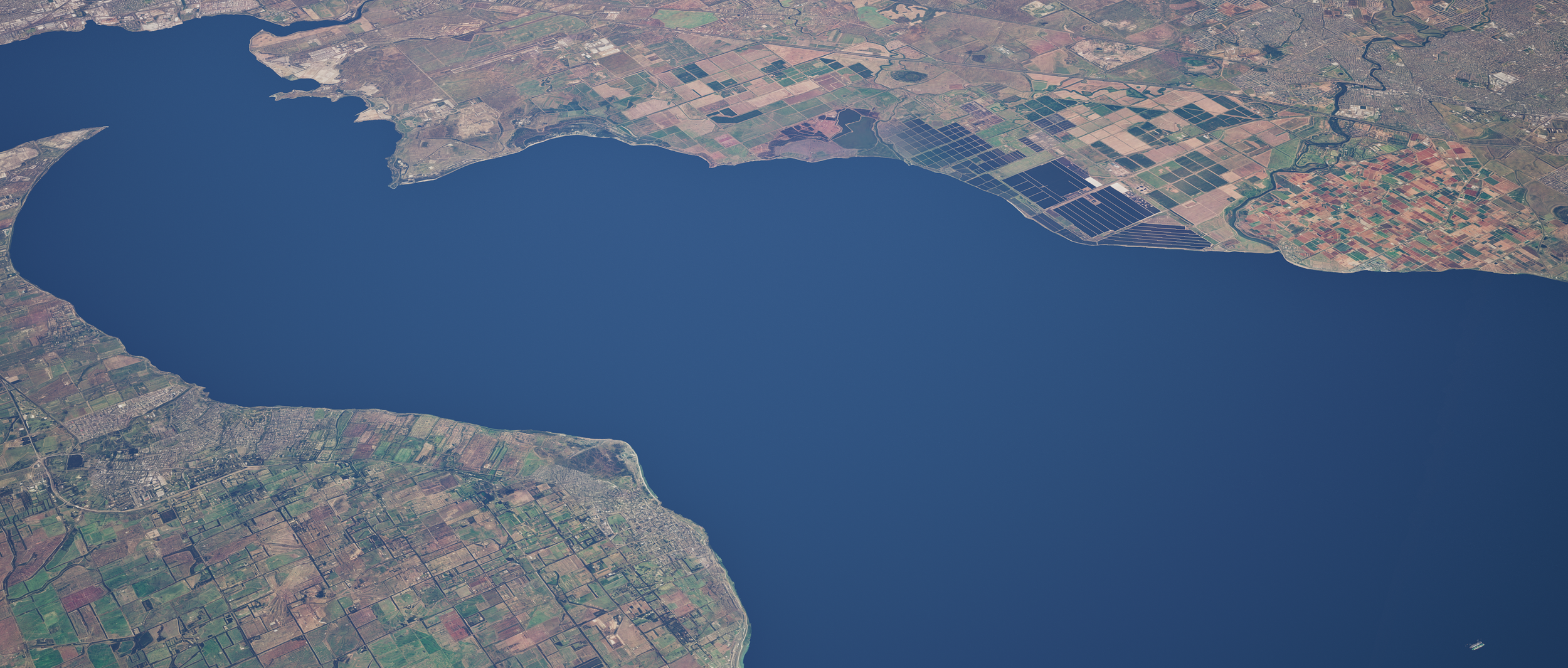
Victoria Energy Terminal is a proposed floating gas storage and regasification terminal in Port Phillip Bay.
Located about 20 kilometres offshore from Avalon near Geelong, it would process liquefied natural gas (LNG) and connect it to Victoria’s network using an underwater pipeline to feed into the existing supply onshore.
About the project
While Victoria shifts towards renewable energy, natural gas continues to play a key role in providing a reliable and flexible energy source for homes, transport and industry.
Vopak proposes to develop a floating LNG regasification terminal to provide a secure, affordable and reliable solution to Victoria’s projected gas supply shortfall.
Victoria Energy Terminal would include:
Floating Storage Regasification Unit (FSRU) - which looks like a large ship, similar to those anchoring and traveling in the bay now
Marine terminal to moor the FSRU
Gas pipeline
Gas receiving station (GRS)
High voltage (HV) power infrastructure
Electrical substations and a terminal station.
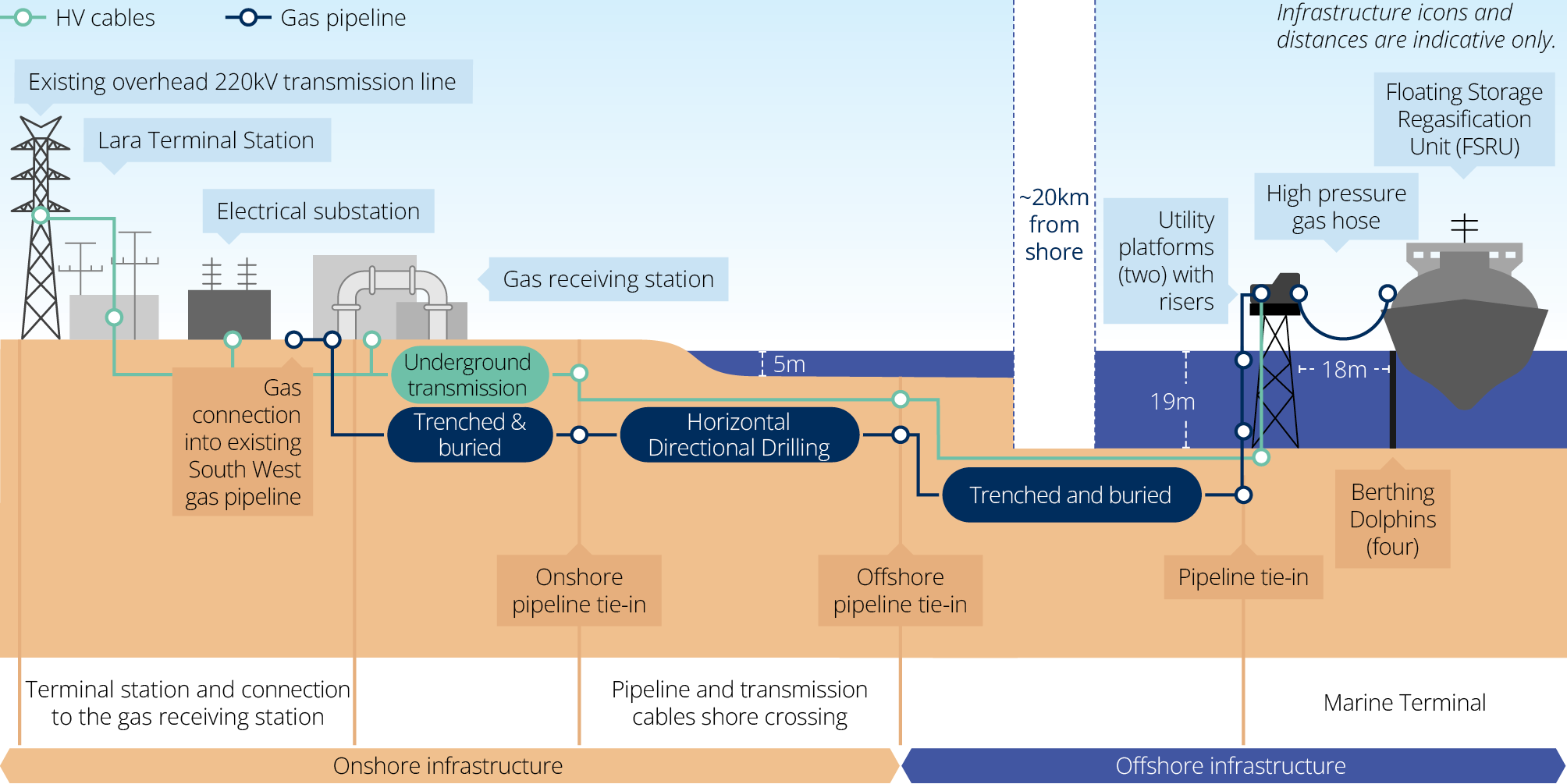
Natural gas would be transferred through a gas pipeline to be processed at the GRS to meet Australian Energy Market Operator (AEMO) specifications. After processing, the gas would enter the Victorian Transmission System (VTS) for use by residential, commercial and industrial customers.
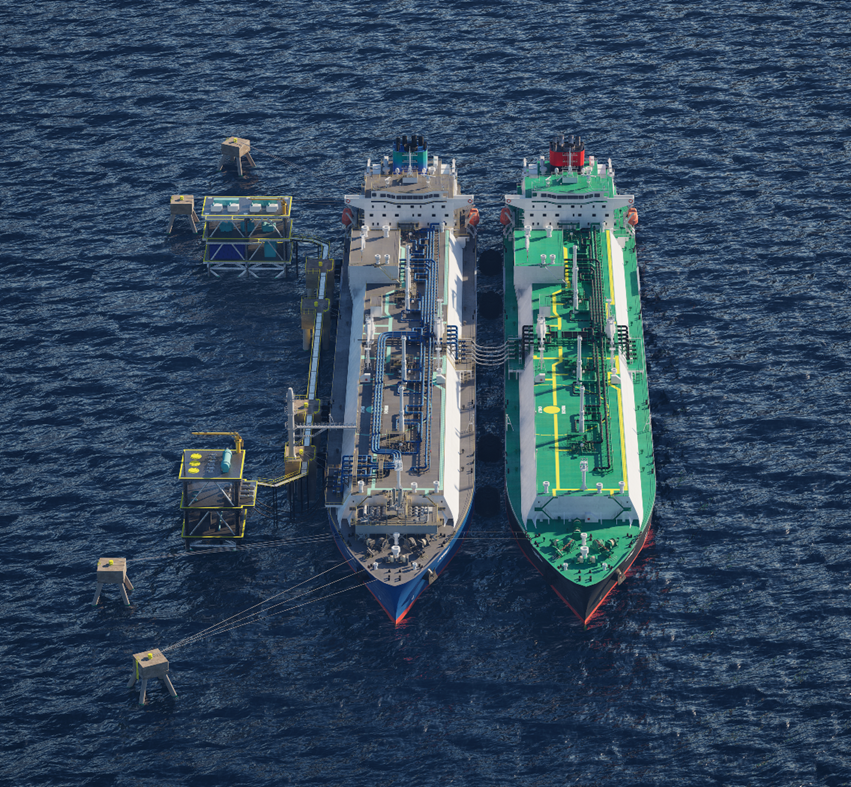
Image: Artist's concept of the FSRU and LNG carrier at the marine terminal.
Project infrastructure
Floating storage regasification unit (FSRU)
The FSRU is a floating vessel that stores and converts LNG back into its gaseous state. The FSRU would be secured using berthing dolphins, designed to moor the vessel and maintain its position during tidal and weather changes. The FSRU could sail away from the terminal at any time if necessary.
LNG carriers arriving from other parts of Australia or the world would berth alongside the FSRU with the assistance of tugboats.
The FSRU would receive LNG via flexible hoses, store LNG in insulated onboard tanks, convert it from liquid to gas and transfer the gas into the subsea pipeline for delivery to shore.
Seapeak is partnering with Vopak to deliver the vessel for the FSRU.
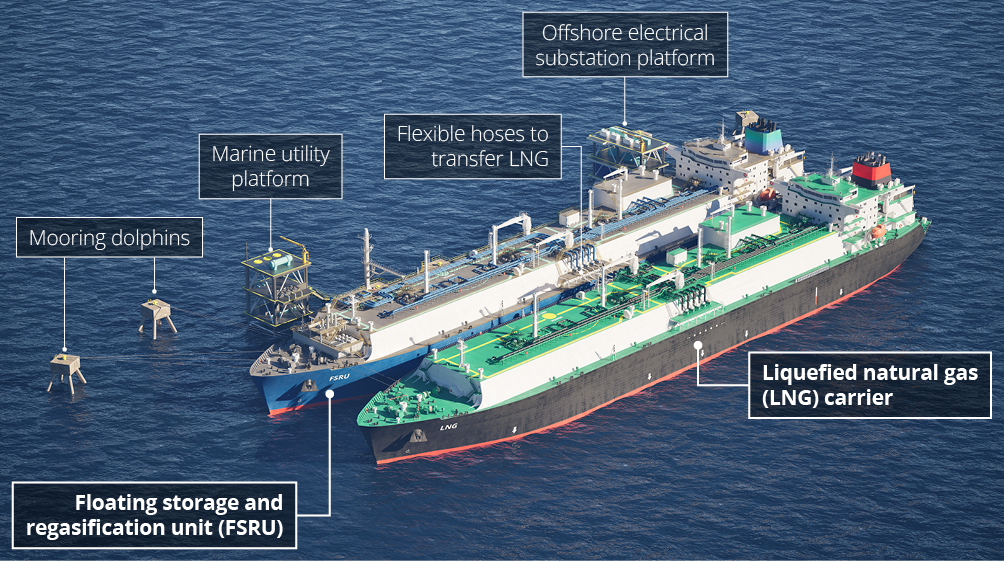
Image: Artist's concept of the FSRU and LNG carrier at the marine terminal.
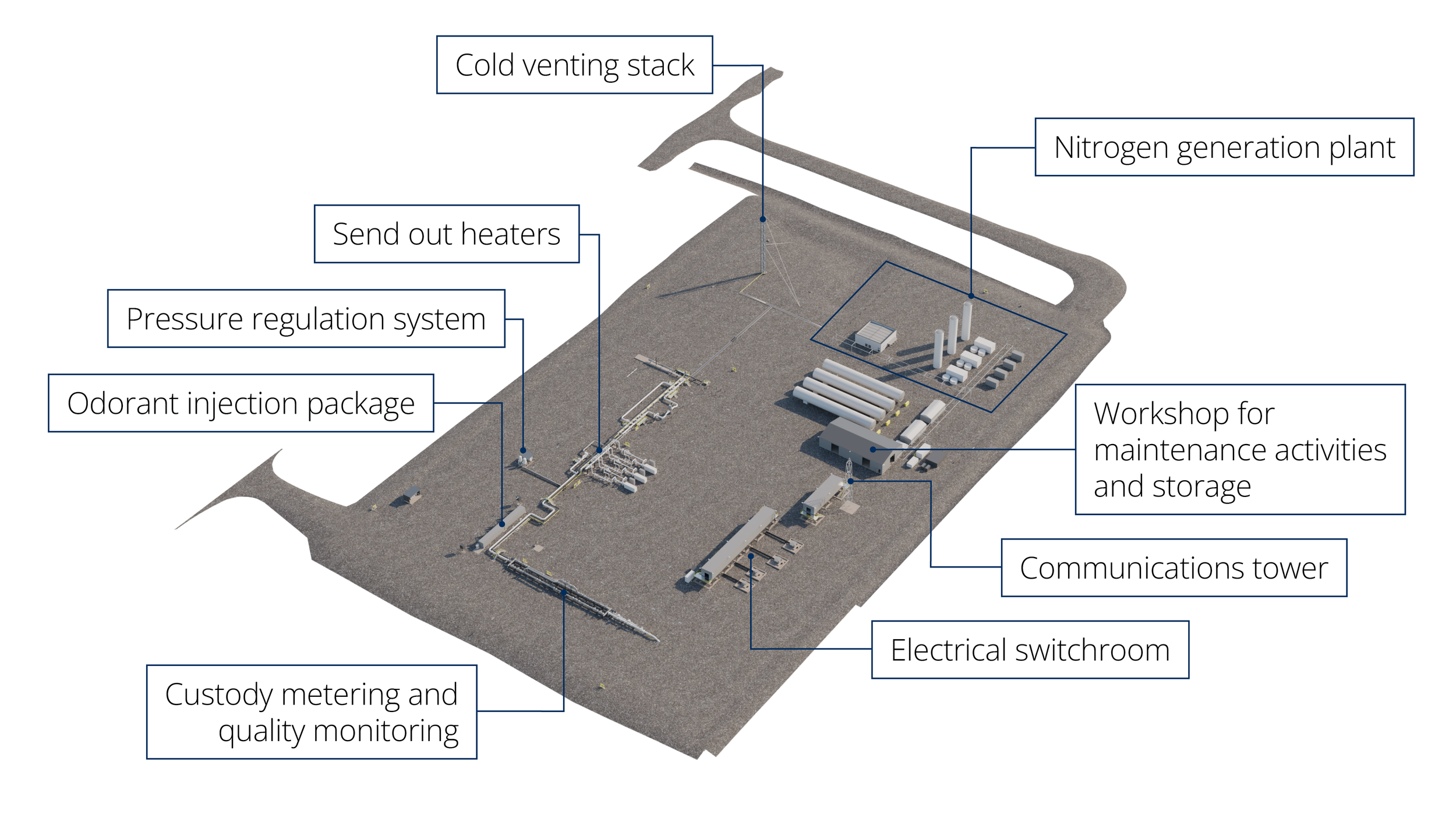
Image: Artist's concept of the infrastructure for the gas receiving station.
Gas receiving station
A gas receiving station would be constructed near the existing South West Pipeline next to the Princes Freeway.
The purpose of the gas receiving station would be to make sure that the gas meets safety, quality and operational requirements before entering the Victorian gas network.
Electrical infrastructure
To power the operation, the project would develop a new electricity connection and infrastructure.
The electricity source would start at a new Terminal Station located at Lara, which is proposed to be constructed, owned and operated by AusNet.